

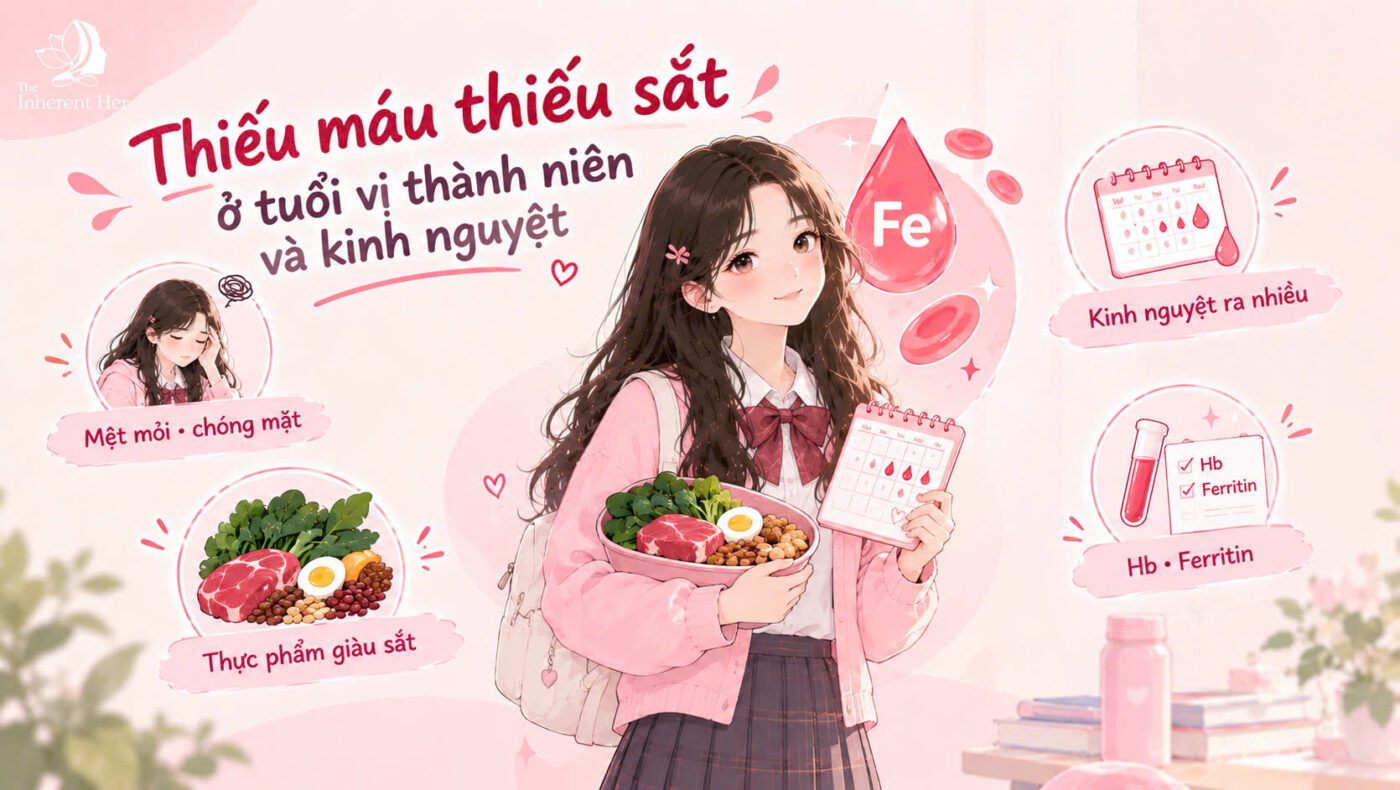
Bạn đã bao giờ đang ngồi trong lớp mà mắt díp lại, đầu choáng váng, tim đập nhanh, trong khi tối qua bạn… ngủ cũng không quá muộn? Đặc biệt, nếu bạn là con gái và kinh nguyệt gần đây ra nhiều hơn bình thường, đó không chỉ là “mệt do học nhiều”, mà có thể là thiếu máu thiếu sắt. WHO ước tính khoảng 30% phụ nữ 15–49 tuổi trên toàn cầu bị thiếu máu, trong đó thiếu sắt là nguyên nhân hàng đầu, và tuổi teen là giai đoạn đặc biệt dễ tổn thương.
Ở tuổi dậy thì, cơ thể bạn cần sắt để xây dựng cơ bắp, não bộ, hệ miễn dịch, đồng thời mỗi tháng lại “mất” một phần sắt qua máu kinh nguyệt. Nếu bạn ăn kiêng để giữ dáng, hay thói quen “sáng uống trà sữa, tối mì gói”, gần như chắc chắn lượng sắt hấp thu không đủ. Các nghiên cứu ở trường học cho thấy các bạn nữ bị thiếu máu thiếu sắt thường mệt mỏi, khó tập trung, nhớ bài kém hơn, dễ ngủ gục trong giờ và bị tụt thành tích học tập.
Một câu hỏi thực tế là làm sao để biết mình nên đi khám? Nếu bạn thấy những dấu hiệu như mệt dai dẳng, da xanh, hay chóng mặt khi đứng lên, móng tay dễ gãy, thở hụt hơi khi chạy bộ; cộng thêm chu kỳ kinh nguyệt kéo dài hoặc phải thay băng liên tục hơn 7 ngày, đó là lúc nên chủ động nói với bố mẹ hoặc tự đặt lịch khám để kiểm tra máu (Hb, ferritin). Đừng ngại nói về kinh nguyệt với bác sỹ, nhiều nghiên cứu cho thấy hỏi kỹ về lượng máu kinh nguyệt giúp phát hiện sớm thiếu máu ở tuổi vị thành niên.
Một số trường học đã áp dụng chế độ dinh dưỡng cho học sinh nữ thiếu máu thiếu sắt bằng cách tăng thực phẩm giàu sắt đã giúp học sinh nữ tăng hemoglobin từ khoảng 112 lên 122 g/L, đồng thời giảm mạnh tỷ lệ thiếu máu. Điều đó có nghĩa là những lựa chọn nhỏ mỗi ngày như thêm thịt, trứng, đậu, rau xanh đậm màu vào bữa ăn, uống nước cam thay vì trà đá sau bữa, không bỏ bữa sáng… thực sự có thể cải thiện mức năng lượng và khả năng tập trung của bạn. Ngoài ra, một số trường học còn bổ sung viên sắt – acid folic hằng tuần tại trường, kèm trò chơi, app hoặc game giáo dục sức khỏe, giúp cải thiện đáng kể kiến thức và thói quen uống sắt.
Vì vậy, nếu bạn là con gái có kinh nguyệt, thiếu máu thiếu sắt là vấn đề rất thường gặp. Mệt mỏi, ngủ gật, khó tập trung, cùng với kinh nguyệt ra nhiều, kéo dài là dấu hiệu cần đi kiểm tra máu. Và, ăn uống đủ sắt, hỏi bác sĩ về bổ sung sắt khi cần, không ngại chia sẻ về chu kỳ kinh nguyệt là cách đơn giản nhưng mạnh mẽ để bảo vệ năng lượng, trí nhớ và sức khỏe tương lai của chính bạn.
—
Have you ever found yourself in class with your eyes drooping, feeling dizzy, and your heart racing, even though you didn’t really go to bed that late the night before? Especially if you’re a girl and your periods have been heavier than usual recently, this isn’t just “being tired from studying too much” – it could be iron deficiency anaemia. The World Health Organization estimates that around 30% of women aged 15–49 worldwide have anaemia, with iron deficiency as the leading cause, and the teenage years are a particularly vulnerable stage.
During puberty, your body needs iron to build muscles, support brain development, and strengthen the immune system, while every month you “lose” some iron through menstrual blood. If you are dieting to stay slim, or your usual pattern is “milk tea for breakfast, instant noodles for dinner”, it’s almost certain that the amount of iron you absorb is not enough. School-based studies show that girls with iron deficiency anaemia often feel tired, have trouble focusing, remember less of what they study, easily fall asleep in class, and see their academic performance drop.
A practical question is: how do you know when you should see a doctor? If you notice symptoms like persistent fatigue, pale skin, feeling light-headed when you stand up, brittle nails, or shortness of breath when you run; combined with periods that last longer than usual or require you to change pads continuously for more than 7 days, that’s the time to talk to your parents or book an appointment yourself to get a blood test (Hb, ferritin). Don’t be shy about discussing your periods with your doctor – many studies show that asking in detail about menstrual blood loss helps detect anaemia early in adolescents.
Some schools have implemented nutrition programmes for girls with iron deficiency anaemia by increasing iron-rich foods, which have raised haemoglobin from about 112 to 122 g/L and significantly reduced anaemia rates. That means small choices you make every day – adding meat, eggs, beans, and dark green leafy vegetables to your meals, choosing orange juice instead of iced tea after eating, and not skipping breakfast – can genuinely boost your energy levels and ability to concentrate. In addition, some schools provide weekly iron–folic acid tablets, together with games, apps, or health education activities, which have markedly improved students’ knowledge and their habit of taking iron supplements.
So, if you’re a girl who menstruates, iron deficiency anaemia is a very common issue you need to be aware of. Tiredness, nodding off in class, difficulty concentrating, plus heavy or prolonged periods are warning signs that you should get your blood checked. Eating enough iron, asking your doctor about supplements when needed, and not hesitating to talk openly about your menstrual cycle are simple but powerful ways to protect your energy, memory, and long-term health.
[1]. WHO. Anaemia. https://www.who.int/news-room/fact-sheets/detail/anaemia. 2025.
[2]. WHO. Prevention of iron deficiency anaemia in adolescents. WHO Regional Office for South-East Asia. 2025.
[3]. Alaofè H,. Education and improved iron intakes for treatment of mild iron-deficiency anemia in adolescent girls in southern Benin. Food and nutrition bulletin. 2009.
[4]. Roche ML,. Adolescent girls’ nutrition and prevention of anaemia: a school based multisectoral collaboration in Indonesia. BMJ. 2018.
[5]. Tarasova I,. 769 Excessive Menstrual Bleeding is a Risk Factor of Anemia in Adolescent School girls. Archives of Disease in Childhood. 2012.
[6]. Putri Sulistian, S,. Improving Health Literacy on Anemia Prevention Among Female Adolescents Through School-Based Interventions: Peningkatan Pengetahuan Remaja Putri Tentang Pencegahan Anemia Melalui Promosi Kesehatan Berbasis Sekolah. Jurnal Abdita Naturafarm. 2025.
Quang Thái