

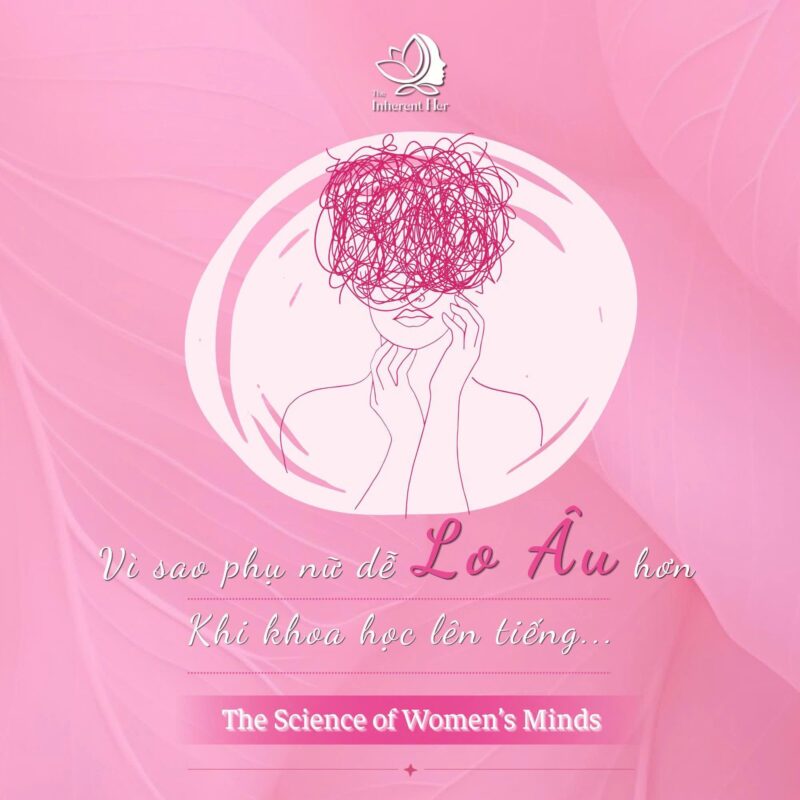
Có một sự thật là: Lo âu không chỉ là cảm xúc, là tính cách, mà còn có cơ sở khoa học. Dưới góc độ khoa học, lo âu không đơn giản là nghĩ nhiều, mà là kết quả của cách não bộ, hormone và hệ thống sinh học phản ứng với thế giới xung quanh. Và ở phụ nữ, những hệ thống này vận hành theo một cách rất đặc biệt. Trung tâm của câu chuyện bắt đầu từ một vùng nhỏ trong não gọi là amygdala. 
Đây là “bộ cảm biến”, luôn quét môi trường để phát hiện rủi ro. Khi amygdala được kích hoạt, cơ thể lập tức chuyển sang trạng thái cảnh giác: Tim đập nhanh hơn, suy nghĩ trở nên dồn dập và cảm giác bất an xuất hiện. Nhiều nghiên cứu cho thấy ở phụ nữ, amygdala có xu hướng phản ứng mạnh hơn với các kích thích cảm xúc, đặc biệt là những tín hiệu tiêu cực. Điều này không có nghĩa là họ yếu đuối, mà là não của họ nhạy hơn với những gì có thể gây tổn thương.
Tuy nhiên, phản ứng lo âu không chỉ dừng lại ở việc phát hiện nguy hiểm mà còn phụ thuộc vào khả năng kiểm soát lại cảm xúc. Đây là vai trò của vùng vỏ não trước trán (Prefrontal cortex), vùng não chịu trách nhiệm về lý trí, giúp chúng ta đánh giá xem mối nguy đó có thật sự nghiêm trọng hay không.
Ở phụ nữ, sự kết nối giữa prefrontal cortex và amygdala có những khác biệt nhất định, khiến quá trình trấn an bản thân đôi khi trở nên khó khăn hơn. Nói cách khác, không phải họ không kiểm soát được cảm xúc, mà là hệ thống xử lý cảm xúc của họ sâu và phức tạp hơn.
Song song với não bộ, hormone đóng vai trò như một “bộ khuếch đại” cảm xúc. Hai hormone quan trọng là estrogen và progesterone không chỉ liên quan đến sinh sản mà còn tác động trực tiếp đến hệ thần kinh. Estrogen ảnh hưởng đến Serotonin, chất dẫn truyền thần kinh giúp ổn định tâm trạng, trong khi progesterone lại liên quan đến hệ GABA, giúp làm dịu hoạt động thần kinh.
Vấn đề nằm ở chỗ, không giống như ở nam giới, các hormone này ở phụ nữ liên tục dao động theo chu kỳ sinh lý. Chính sự biến động này khiến cảm xúc không phải lúc nào cũng ổn định, và trong những giai đoạn nhất định, não trở nên nhạy hơn với stress và lo âu. Khi nói đến stress, không thể bỏ qua trục HPA, hệ thống điều phối phản ứng căng thẳng của cơ thể.
Khi gặp áp lực, trục này sẽ kích hoạt giải phóng cortisol, giúp cơ thể đối phó với tình huống nguy hiểm. Tuy nhiên, ở phụ nữ, phản ứng của trục HPA có xu hướng kéo dài hơn, đồng nghĩa với việc cơ thể ở trong trạng thái “căng thẳng” lâu hơn. Khi trạng thái này lặp đi lặp lại, nó có thể chuyển từ phản ứng tạm thời thành lo âu mãn tính.
Nhưng nếu chỉ nhìn từ sinh học, câu chuyện vẫn chưa đầy đủ. Từ góc độ tiến hóa, việc nhạy cảm với nguy cơ từng là một lợi thế. Trong bối cảnh cổ xưa, phụ nữ thường đảm nhận vai trò chăm sóc con cái và khả năng nhận diện sớm những mối đe dọa có thể giúp tăng cơ hội sống sót. Điều đó có nghĩa là một phần của lo âu ngày nay thực chất là dấu vết của một cơ chế sinh tồn từng rất hiệu quả. Bên cạnh đó, xã hội hiện đại lại vô tình khuếch đại những cơ chế này.
Phụ nữ thường phải đối mặt với nhiều áp lực đồng thời: Công việc, gia đình, kỳ vọng cảm xúc và cả những tiêu chuẩn vô hình về việc “phải quan tâm” hay “phải tinh tế”. Những yếu tố này dễ dẫn đến xu hướng suy nghĩ lặp lại (rumination), nơi một vấn đề nhỏ có thể bị phân tích đi phân tích lại cho đến khi trở thành nguồn lo âu lớn hơn. Không ngạc nhiên khi các nghiên cứu dịch tễ học cho thấy phụ nữ có nguy cơ mắc Anxiety Disorders cao hơn nam giới khoảng hai lần. Nhưng điều quan trọng là con số này không phản ánh sự yếu kém mà phản ánh sự khác biệt trong cách não và cơ thể phản ứng với thế giới.
Hiểu được điều này giúp chúng ta nhìn nhận lo âu theo một cách khác. Đó không phải là vấn đề cần loại bỏ hoàn toàn; thay vì phán xét, điều cần thiết hơn là học cách điều hòa nó, đồng thời xây dựng một môi trường ít gây áp lực hơn cho chính mình và cho những người xung quanh.
Tài liệu tham khảo (Vancouver)
– McLean CP, Asnaani A, Litz BT, Hofmann SG. Gender differences in anxiety disorders: prevalence, course, and comorbidity. Psychiatr Clin North Am. 2011;34(2):295–314.
– Goldstein JM, Jerram M, A bbs B, Whitfield-Gabrieli S, Makris N. Sex differences in stress response circuitry activation dependent on female hormonal cycle. J Neurosci. 2010;30(2):431–438.
– Bangasser DA, Valentino RJ. Sex differences in stress-related psychiatric disorders: neurobiological perspectives. Front Neuroendocrinol. 2014;35(3):303–319.
– Altemus M, Sarvaiya N, Neill Epperson C. Sex differences in anxiety and depression clinical perspectives. Front Neuroendocrinol. 2014;35(3):320–330.
– Rubinow DR, Schmidt PJ. Sex differences and the neurobiology of affective disorders. Neuropsychopharmacology. 2019;44:111–128.
– Lebron-Milad K, Milad MR. Sex differences, gonadal hormones, and the fear extinction network. Neurobiol Learn Mem. 2012;96(1):13–22.
____________________
ENG:
Why Are Women More Prone to Anxiety? When Science Explains What Seems Like “Personality”
There is an important truth we often overlook: Anxiety is not just an emotion or a personality trait-it is also biology. From a scientific perspective, anxiety is not simply “overthinking,” but the result of how the brain, hormones, and biological systems respond to the world. And in women, these systems operate in a uniquely dynamic way. At the center of this process is a small but powerful brain region called the amygdala. It functions as a “threat detector,” constantly scanning the environment for potential danger from a subtle facial expression or tone of voice to emotionally charged memories from the past.
When the amygdala is activated, the body shifts immediately into a state of alertness: The heart rate increases, thoughts accelerate, and a sense of unease emerges. Research shows that in women, the amygdala tends to respond more strongly to emotional stimuli, especially negative ones. This does not mean women are weaker; it means their brains are more sensitive to signals that may indicate harm. However, anxiety is not only about detecting threats; it also depends on how well the brain can regulate those emotional responses.
This is where the prefrontal cortex comes in-the region responsible for rational thinking and emotional control. It helps us evaluate whether a perceived threat is truly dangerous. In women, the connectivity between the prefrontal cortex and the amygdala shows certain differences, which can make the process of “calming oneself down” more challenging in some situations. In other words, it is not that women lack emotional control, but rather that their emotional processing system is deeper and more complex.
Alongside the brain, hormones act as powerful amplifiers of emotion. Two key hormones, estrogen and progesterone, are not only involved in reproduction but also directly influence the nervous system. Estrogen affects serotonin, a neurotransmitter essential for mood stability, while progesterone interacts with the GABA system, which helps calm neural activity. The key issue is that, unlike in men, these hormones in women fluctuate continuously throughout the menstrual cycle.
These fluctuations mean that emotional states are not always stable, and during certain phases, the brain becomes more sensitive to stress and anxiety. When it comes to stress, we cannot ignore the HPA axis, the system that regulates the body’s stress response. When faced with pressure, this axis triggers the release of cortisol, allowing the body to cope with threats.
However, in women, the stress response mediated by the HPA axis tends to last longer, meaning the body remains in a heightened state of tension for an extended period. When this happens repeatedly, it can shift from a temporary response into chronic anxiety. Yet biology alone does not tell the whole story. From an evolutionary perspective, heightened sensitivity to potential threats was once an advantage.
Historically, women often played central roles in caregiving, and the ability to detect subtle dangers could improve survival. This suggests that part of modern anxiety may actually be a remnant of a once highly adaptive survival mechanism. At the same time, modern society can amplify these biological tendencies. Women often face multiple layers of pressure simultaneously-career demands, family responsibilities, emotional expectations, and unspoken standards of being “caring” or “attentive.”
These pressures can lead to rumination, a pattern of repetitive thinking where small concerns are analyzed over and over until they become sources of significant anxiety. It is therefore not surprising that epidemiological studies show women are about twice as likely as men to experience anxiety disorders. But this statistic does not reflect weakness-it reflects differences in how the brain and body respond to the world.
Understanding this allows us to see anxiety in a new light. It is not something that must be eliminated, but rather a signal sometimes overly sensitive from a system designed to protect us. And instead of judgment, what we need is a better ability to regulate it, along with a more supportive environment for ourselves and for those around us.
__________________
Vancouver:
– McLean CP, Asnaani A, Litz BT, Hofmann SG. Gender differences in anxiety disorders: prevalence, course, and comorbidity. Psychiatr Clin North Am. 2011;34(2):295–314.
– Goldstein JM, Jerram M, A bbs B, Whitfield-Gabrieli S, Makris N. Sex differences in stress response circuitry activation dependent on female hormonal cycle. J Neurosci. 2010;30(2):431–438.
– Bangasser DA, Valentino RJ. Sex differences in stress-related psychiatric disorders: neurobiological perspectives. Front Neuroendocrinol. 2014;35(3):303–319.
– Altemus M, Sarvaiya N, Neill Epperson C. Sex differences in anxiety and depression clinical perspectives. Front Neuroendocrinol. 2014;35(3):320–330.
– Rubinow DR, Schmidt PJ. Sex differences and the neurobiology of affective disorders. Neuropsychopharmacology. 2019;44:111–128.
– Lebron-Milad K, Milad MR. Sex differences, gonadal hormones, and the fear extinction network. Neurobiol Learn Mem. 2012;96(1):13–22.
_____________________
𝐓𝐡𝐞 𝐈𝐧𝐡𝐞𝐫𝐞𝐧𝐭 𝐇𝐞𝐫 – 𝐕𝐨̂́𝐧 𝐝𝐢̃ 𝐯𝐞̣𝐧 𝐧𝐠𝐮𝐲𝐞̂𝐧